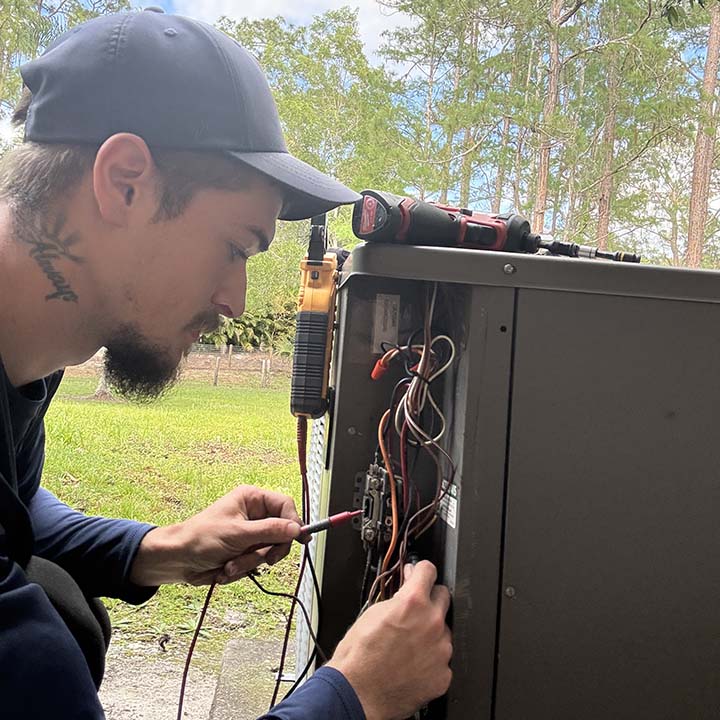
Air Conditioning Repair and Maintenance
Fast, accurate diagnosis and repair for all makes and models. We get your system back up and running right the first time.
Fast, accurate diagnosis and repair for all makes and models. We get your system back up and running right the first time.
If your AC is blowing warm air, running nonstop, leaking water, or making noises it never used to, Green Works AC can diagnose and repair it for homeowners in Hobe Sound, DL, then set up maintenance to keep it from happening again. This page covers AC repair, tune-ups, and preventive maintenance. To get started, call or send a request describing what the system is doing, and we offer same-day service whenever possible.
Most cooling problems begin small. The house takes longer to cool in the afternoon, a vent feels weaker than it did last month, or the air feels sticky even though the system is running. In South Florida the AC rarely gets a day off, so a minor fault can turn into a full breakdown in the middle of summer. Tell us the brand if you know it, how old the system is, when the problem shows up, and anything you have already tried. That gives the technician a head start before arriving.
Not every symptom means a big repair, but each one is worth a look. These are the complaints we hear most from homeowners:
Make sure the thermostat is set to cool and has working batteries if it uses them. Check that the air filter is not packed with dust. Look at the breaker panel for a tripped switch. These steps take a few minutes and sometimes solve the problem. Do not remove panels or reset a breaker repeatedly, because that can hide a deeper electrical fault.
If you see ice, standing water, or smell something burning, switch the system off at the thermostat and call. Running a frozen or leaking unit can damage the compressor or the ceiling and flooring around the air handler.
Homeowners often use these terms interchangeably, but they are different jobs with different goals.
A good technician will tell you which category your problem falls into and explain why, rather than steering you toward the bigger job.
Every home is different, but a thorough AC repair call usually follows this order:
One note on refrigerant: an AC does not use up refrigerant like fuel. If it is low, there is usually a leak, and simply adding more only buys time. Ask what was found and what the plan is to fix the source.
Maintenance is the cheapest way to avoid a repair call on the hottest day of the year. A typical AC tune-up includes:
We service all major brands, including Lennox, Trane, Carrier, Rheem, Goodman, Daikin, Bryant, Amana, RUUD, York, Tempstar, and Payne. If you prefer not to track reminders yourself, ask about our annual or monthly maintenance plans.
If airflow stays weak after the AC itself checks out, the cause may be in the ductwork. Professional air duct cleaning and robotic air duct inspections are separate services we also offer, and we can talk you through whether they make sense for your home.
Whoever you hire, here are practical standards to judge the work:
AC repair pricing depends on what is actually wrong. The main factors are:
A clear written quote should spell out the scope of work, which parts are being replaced, any extras such as drain treatment or coil cleaning, and how changes will be handled if the technician finds something new once the job is underway. You should never be surprised by a line item you did not approve.
Before you hire anyone for AC repair or maintenance, ask:
Straight, specific answers are a good sign. Vague ones are worth noting.
Air conditioners in Hobe Sound, DL work hard. Cooling season is long, humidity is high most of the year, and afternoon storms can bring power surges that stress capacitors and control boards. Moisture also feeds algae and slime in condensate drain lines, which is why clogged drains and water leaks are such common calls. Homes closer to the coast may also see more corrosion on outdoor units.
We serve Martin County and the surrounding area, including Indian River, Okeechobee, Saint Lucie, Palm Beach, and Northern Broward counties. If your AC is acting up, call or send a request and tell us what you are seeing.
Most systems here benefit from at least one tune-up a year, ideally before the heaviest cooling months. Because the AC runs for much of the year in South Florida, some homeowners choose two visits a year. Your system's age and condition can help decide.
Common causes include a dirty filter or coil, a failed capacitor or fan motor, low refrigerant from a leak, or a frozen coil. A technician needs to test the system to tell which one it is.
It depends on the problem. A clogged drain or a simple electrical part is usually quicker than a leak search or a part that must be ordered. The technician can give you a realistic idea once the diagnosis is done.
The price reflects the diagnosis, the parts needed, the difficulty of the repair, and any added cleaning. Ask for the scope in writing before approving work.
Often yes, if the problem is a single part and the rest of the system is in decent shape. If repairs keep stacking up, replacement may make more sense, and a good provider will explain both paths honestly.
It can reduce the chances. Clearing the condensate drain and checking the drain pan during a tune-up catches buildup before it backs up into your home.
When you are ready, call Green Works AC or send a request, and describe what your system is doing so we can plan the visit.

One call is all it takes. A NATE-certified technician arrives equipped, diagnoses it right, and gets your system running fast.