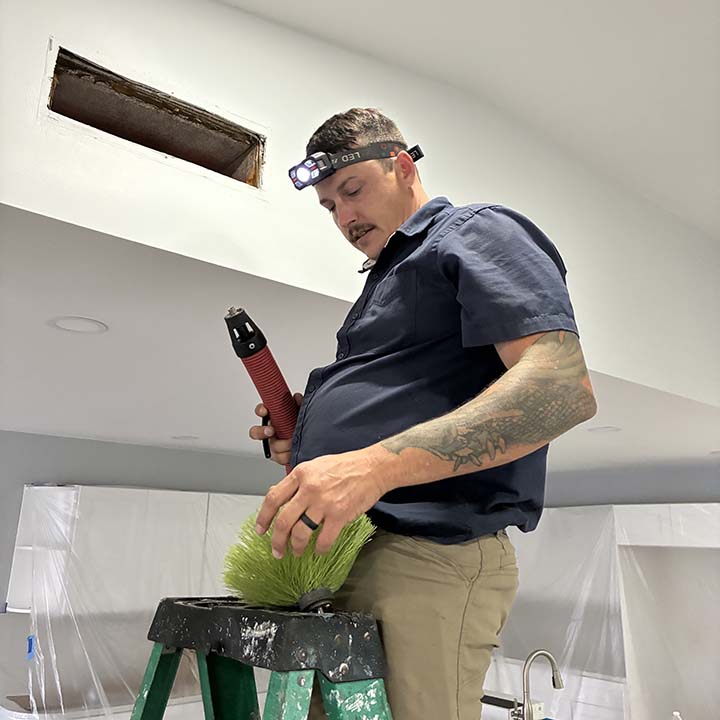
Robotic Air Duct Inspections
Our advanced camera robot gives you a live view inside your duct system, identifying blockages, damage, and issues invisible to the naked eye.
Our advanced camera robot gives you a live view inside your duct system, identifying blockages, damage, and issues invisible to the naked eye.
Green Works AC provides robotic air duct inspections for Hobe Sound, DL homeowners who want to see what is really inside their ductwork before paying for cleaning, repairs, or a new system. A small robot travels through the ducts so you can look at the actual condition instead of guessing. To get started, call or send a request and describe what you are noticing at home.
Maybe the vents keep blowing dusty air, a musty smell shows up when the AC kicks on, or one bedroom never cools like the others. You may have already had the unit looked at and still feel like something is being missed. Ducts are hidden in attics, walls, and ceilings, so problems stay out of sight until you can see inside them. That is the gap an inspection closes.
Not every comfort problem starts at the air handler or the outdoor unit. These are the symptoms that most often point back to the ducts:
Any of these can have several causes. An inspection helps sort out which ones are really in the duct system.
A robotic inspection sends a remote-controlled unit through the supply and return runs. It lets us look at areas no one can reach by hand or see from a vent opening. You get a clear picture of the real condition, not a sales pitch based on a flashlight peek.
Dust, construction residue, and loose material collect over the years. The inspection shows whether the buildup is light and normal or heavy enough to affect airflow.
Ducts can sweat when cold air moves through a hot attic. The robot can reveal signs of moisture, suspected growth, crushed or sagging sections, disconnected joints, and loose connections that waste cooled air.
Many homeowners book a cleaning without knowing whether their ducts need one. An inspection answers that question first. This page covers the inspection itself: looking, documenting what is found, and explaining your options.
Cleaning is a separate service that we also offer, and so are AC repair and system replacement. If the inspection shows heavy buildup, a damaged section, or a bigger system problem, we can walk you through the next step. If the ducts look fine, you have saved yourself an unneeded job.
Every home is laid out differently, but a robotic inspection generally follows this order:
Ask to see the findings yourself. A good inspection should leave you able to explain your duct condition to someone else.
South Florida runs its AC for most of the year, and the humidity is high for much of it. Many homes in this area have ducts routed through hot attics, where cool air inside the duct meets warm, moist air outside it. That combination typically creates condensation risk, and it can be hard on flexible duct, insulation, and joints over time.
Homes also deal with fine dust, pollen, and storm-season debris. Older houses may have original ductwork that has gone through several system replacements. Newer homes sometimes carry construction dust left in the runs. An inspection is useful in both situations, especially when you are about to replace equipment and want to know whether the existing ducts are worth keeping.
Whoever you hire, here are standards you can use to judge the work:
Pricing for a robotic inspection depends on the house and the system. The main factors are:
A clear written quote should spell out which systems and runs are included, what you will receive when the inspection is done, any extras that could be added, and how changes are handled if the technician finds something unexpected. Green Works AC works with transparent pricing, so ask for those details in writing before the visit.
Use these with any company that offers duct inspections in the Hobe Sound area:
It depends on how many systems and duct runs your home has and how easy they are to reach. Ask for an estimate of the visit length when you schedule.
There is no single schedule. An inspection makes sense when you notice odors, dust, or uneven cooling, after a renovation or storm damage, or before replacing your AC equipment.
It helps. Being there lets you watch what the robot finds and ask questions while the technician is pointing at the actual problem.
The price follows the number of systems, the length and layout of the ductwork, access conditions, and whether you want follow-up work. A written quote should list each of those items.
Inspection is generally less disruptive than cleaning or repair, since the robot does the traveling inside the ducts. You should still expect access to attic space, vents, and the air handler area.
Not necessarily. Clean-looking registers can sit in front of runs that have buildup, moisture, or damage farther back. That is why seeing inside the system is worth it.
If you live in Hobe Sound and want a straight answer about the condition of your ducts, call or send a request. Tell us what you have noticed, and we will help you decide whether an inspection is the right first step.

One call is all it takes. A NATE-certified technician arrives equipped, diagnoses it right, and gets your system running fast.