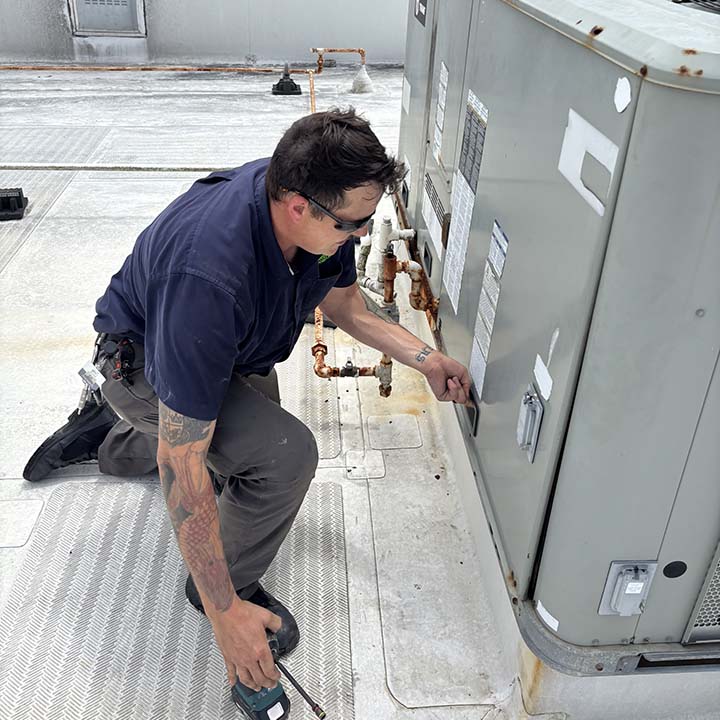
New AC Installation and Replacement
When repair is no longer enough, we install energy-efficient systems sized precisely for your home. No overselling, no shortcuts.
When repair is no longer enough, we install energy-efficient systems sized precisely for your home. No overselling, no shortcuts.
Green Works AC handles new AC installation and replacement for Hobe Sound, DL homeowners whose system has quit, keeps breaking down, or can no longer keep the house comfortable. Call or send a request, and we will look at your home, your current equipment, and your options before anything is decided.
Maybe the house never gets below 80 on an August afternoon. Maybe the compressor is loud, the energy bill keeps climbing, or the last two repairs did not hold. Replacing an air conditioner is a big decision, and you should not have to make it blind. This page explains how the process works, what to ask, and what drives the price.
An AC does not always die all at once. In South Florida's long, humid cooling season, systems run for months with little rest, and the wear shows up in familiar ways:
Any one of these does not automatically mean a new system. Several together usually do.
Homeowners often wonder whether a repair will buy another few years. AC repair is a separate service from this page. Repair fixes a specific failed part. Replacement swaps out the equipment itself. This page covers replacement and new installation.
A newer system with one failed part, such as a capacitor or a fan motor, is usually worth fixing. If the rest of the system is in good shape, a repair keeps your investment working.
An older unit with a failing compressor or coil, repeated refrigerant leaks, or a pattern of breakdowns is often a poor place to keep spending. A fair recommendation compares the repair cost against the age and condition of the whole system, and explains the reasoning in plain language.
Every home is different, but a typical AC change-out follows this order:
We service and install all major brands, including Lennox, Trane, Carrier, Rheem, Goodman, Daikin, Bryant, Amana, RUUD, York, Tempstar, and Payne. That means the recommendation can fit your home and budget rather than a single product line.
Higher-efficiency systems typically cost more upfront and can lower running costs, which matters in a climate where the AC runs most of the year. Variable-speed equipment can also manage humidity more evenly. Ask to see the tradeoffs side by side.
New equipment can only perform as well as the air paths it is connected to. If you notice weak airflow, dust, or uneven rooms, ask whether the ductwork should be looked at. Air duct cleaning and robotic air duct inspections are separate services we offer, and you can ask about them when planning a change-out.
No two replacements cost the same, and anyone quoting a number without seeing your home is guessing. The main factors are:
A clear written quote should spell out the exact equipment, the scope of work, what is and is not included, and how changes will be handled if something unexpected comes up once work begins. If a line item is vague, ask about it before you sign.
You do not need to be a technician to judge an installation. Use these standards for any provider:
Before you hire anyone for an AC installation in the Hobe Sound area, ask:
We work from Hobe Sound and serve homeowners across Martin County, along with Indian River, Okeechobee, Saint Lucie, Palm Beach, and northern Broward counties. Coastal humidity, salt air, and heavy summer use are normal wear factors for outdoor equipment here, so it is fair to ask about equipment placement and how the unit will hold up over time.
Many straightforward change-outs can be completed in about a day, but it depends on the system, the access to equipment, and whether electrical or duct work is involved. Your quote should give a realistic schedule.
In South Florida, systems typically last somewhere around 10 to 15 years, depending on use, upkeep, and the conditions around the outdoor unit. Regular tune-ups can help a system reach the longer end of that range.
The price reflects the system capacity, brand and efficiency, scope of work, home layout, and any required updates. A written quote after an evaluation is the reliable way to see where your cost comes from.
Often yes, because matched equipment tends to run more efficiently and reliably. The technician can tell you whether a partial replacement is a sensible option for your system.
Yes. We install all the major brands, and you can compare options based on efficiency, features, and budget before deciding.
Clear access to the indoor air handler and the outdoor unit, and move furniture or stored items out of the way. Confirm with the crew if pets or gates could affect access.
If your AC is aging, failing, or costing you more every month, call or send a request to Green Works AC. We will review your home, talk through repair and replacement honestly, and give you a written quote you can read before you commit.

One call is all it takes. A NATE-certified technician arrives equipped, diagnoses it right, and gets your system running fast.